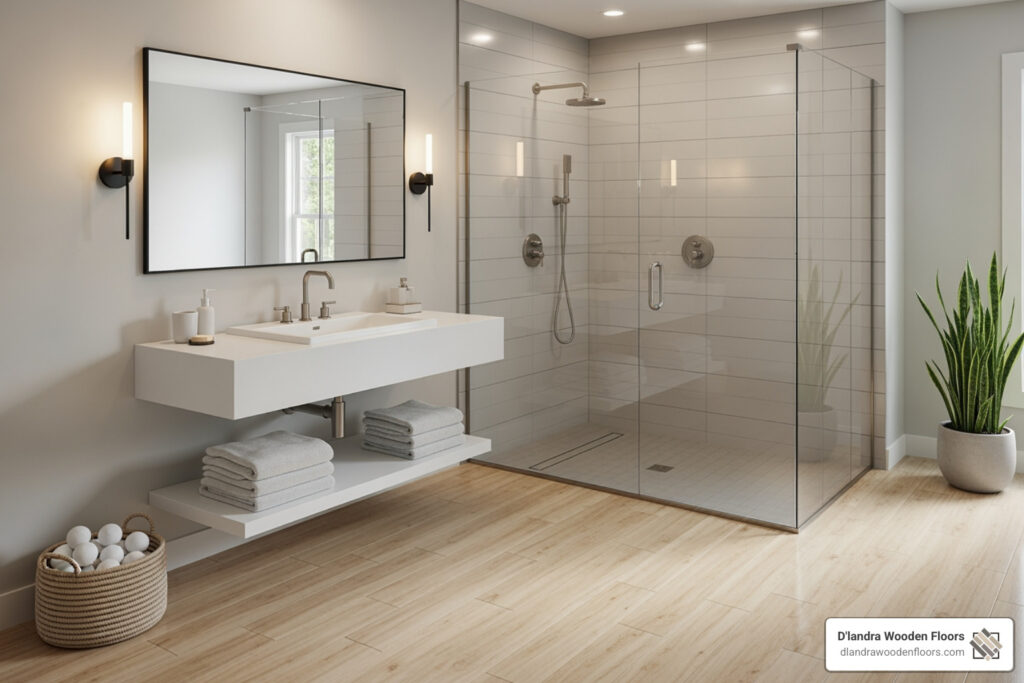
Why Waterproof Bathroom Vinyl Flooring is the Smart Choice for Florida Homes
Waterproof bathroom vinyl flooring is a 100% moisture-resistant, durable, and stylish flooring solution specifically engineered to handle the unique challenges of bathroom environments. Here’s what makes it the ideal choice:
Key Features at a Glance:
- 100% Waterproof – Won’t swell, warp, or degrade from standing water or high humidity
- Easy Installation – Click-lock systems available; can be installed over existing floors
- Durability – 20-30 mil wear layers resist scratches, stains, and heavy traffic
- Cost-Effective – Ranges from $1-$5 per square foot, significantly less than tile or natural stone
- Low Maintenance – Simple wet mopping keeps floors looking new for years
- Style Variety – Realistic wood-look and stone-look designs in hundreds of colors and patterns
Bathrooms present a unique flooring challenge. Between daily showers, splashing sinks, and Florida’s notorious humidity, moisture is constant. Traditional hardwood warps. Laminate swells at the seams. Even some vinyl products marketed as “water-resistant” can fail when faced with prolonged exposure to water.
That’s where true waterproof bathroom vinyl flooring changes the game. The global waterproof vinyl flooring market was valued at $11.2 billion in 2022 and is projected to reach $20.5 billion by 2030—and for good reason. Modern waterproof vinyl combines innovative rigid core technology with realistic designs that rival natural materials, all while standing up to everything a busy bathroom throws at it.
Whether you’re renovating a master bath in Coral Springs, updating a condo bathroom in Parkland, or tackling a full home refresh in Coconut Creek, choosing the right flooring means balancing beauty, performance, and budget. This guide walks you through everything you need to know: the different types of waterproof vinyl, key features to prioritize, how it compares to tile and laminate, and what to expect during installation.
I’m Alissa Landra, founder of D’Landra Wooden Floors, and I’ve helped hundreds of South Florida homeowners steer waterproof bathroom vinyl flooring decisions for their unique climate needs. From understanding wear layer thickness to choosing between SPC and WPC cores, I’ll share the insights that matter most for making a confident, informed choice.
The Unbeatable Benefits of Waterproof Vinyl in Bathrooms
Let me tell you why waterproof bathroom vinyl flooring has become our most recommended solution for South Florida bathrooms. After years of helping homeowners in Coral Springs, Parkland, and across Broward County, I’ve seen how this flooring performs in our notoriously humid climate—and the results speak for themselves.
100% Waterproof
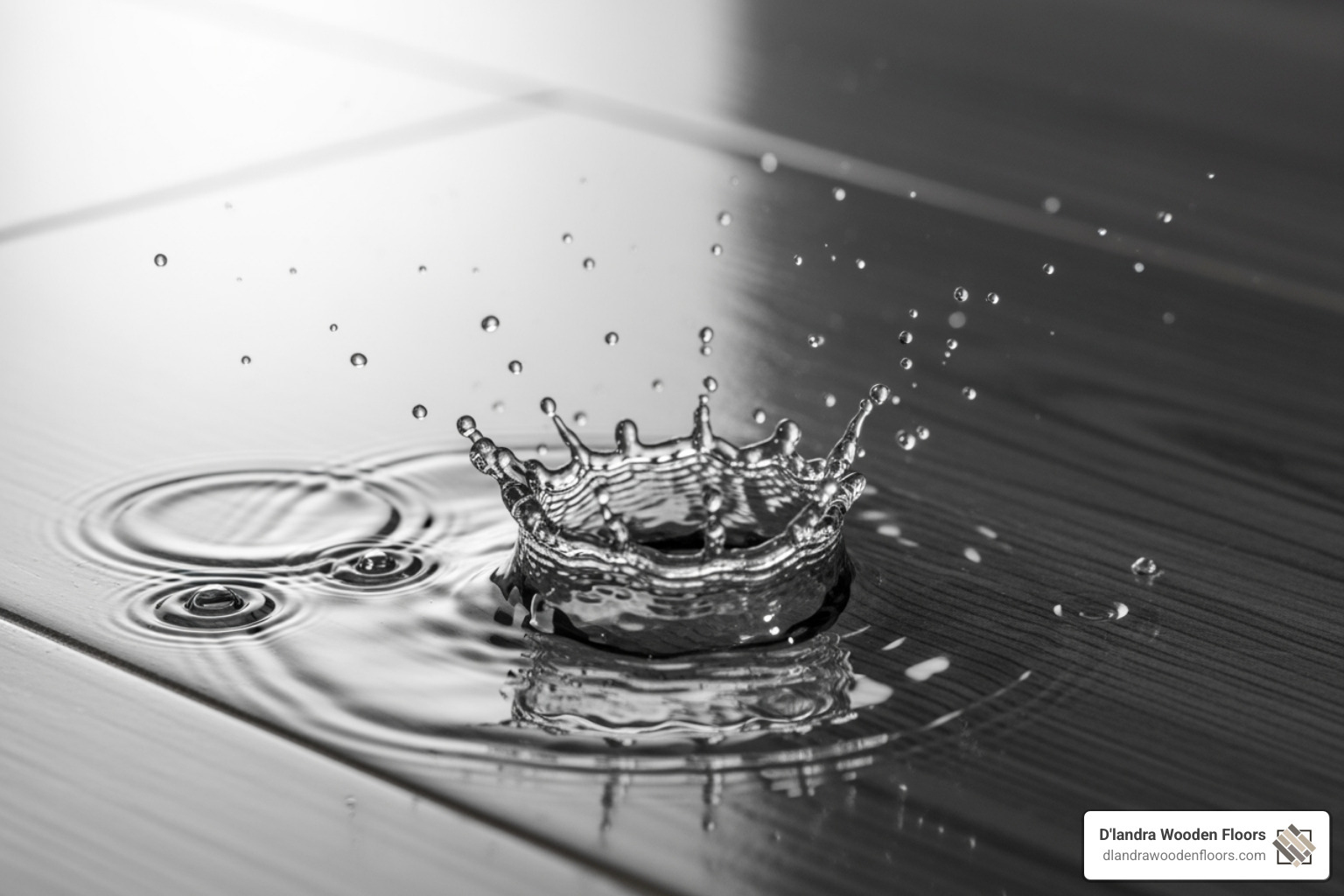
This isn’t just marketing speak—it’s the foundation of everything that makes vinyl exceptional for bathrooms. When we say 100% waterproof, we mean the entire plank or tile, from the wear layer on top straight through to the backing underneath. Standing water from an overflowing tub? No problem. Daily shower splashes? Doesn’t faze it. Even that mysterious puddle you find behind the toilet won’t cause swelling, warping, or bubbling.
Compare this to laminate flooring, which manufacturers typically rate as water-resistant for only 30 hours. That’s just over a day before moisture starts penetrating and causing damage. True waterproof bathroom vinyl flooring laughs at time limits. It’s engineered with rigid cores and sealed edges that repel water indefinitely, giving you complete peace of mind in the most moisture-prone room of your home.
For South Florida homeowners dealing with year-round humidity that hovers around 70-80%, this waterproof protection isn’t a luxury—it’s essential. I’ve replaced too many warped laminate and damaged hardwood floors in bathrooms to count. With genuine waterproof vinyl, those callbacks simply don’t happen.
Durability That Stands the Test of Time
Modern vinyl flooring is built like a tank, especially the rigid core varieties we’ll discuss later. The construction creates exceptional resilience against everything daily life throws at it. We’re talking about a floor that handles dropped hair dryers, shifting furniture, and the constant foot traffic of busy mornings without showing wear.
What really impresses homeowners is how it performs in real-world conditions. Waterproof bathroom vinyl flooring stands up beautifully to kids who treat bath time like a splash park and pets who track in sand from Florida beaches. The scratch resistance means even the clicking of dog nails across the floor won’t leave visible marks. For families in Coconut Creek and beyond, this durability translates to a floor that looks fresh and performs reliably for 15-20 years or more.
Scratch and Stain Resistance
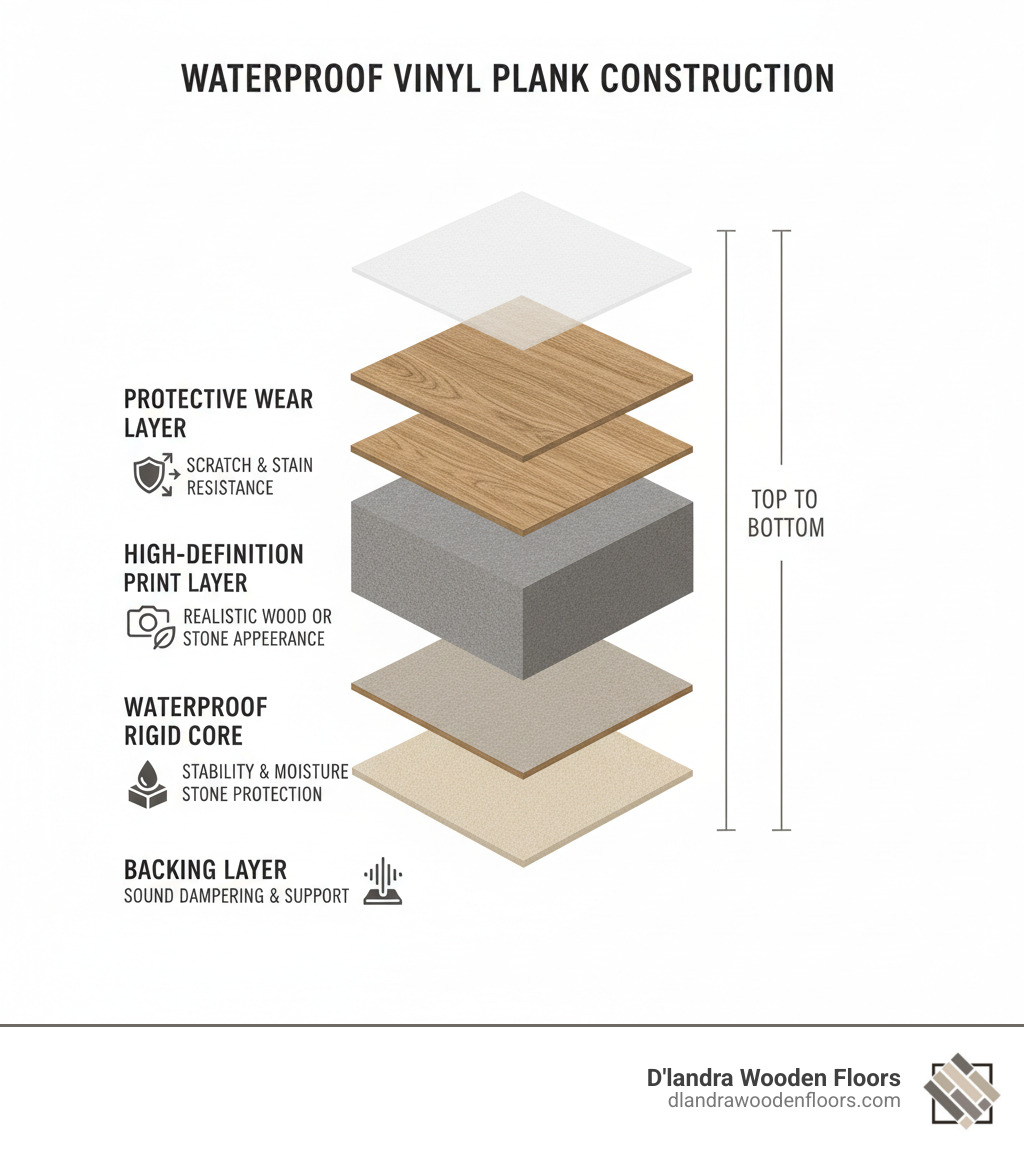
The secret weapon here is the wear layer—a transparent protective coating that shields the design layer underneath. These advanced wear layers, measured in “mils” (thousandths of an inch), create a barrier against scratches, scuffs, and stains. Drop your curling iron? No burn mark. Spill nail polish? Wipes right up. Even abrasive bathroom cleaners won’t damage the surface.
We typically recommend a wear layer of at least 12 mils for residential bathrooms, though 20-mil or higher offers even better protection for high-traffic areas. This protective shield is what keeps your floor looking showroom-new year after year, even with the inevitable wear that comes from daily use. You can explore more about these protective benefits on our vinyl flooring advantages page.
Comfort Underfoot
Here’s something that surprises first-time vinyl buyers: stepping out of the shower onto waterproof bathroom vinyl flooring feels nothing like the cold shock of ceramic tile. Modern vinyl options, particularly those with WPC (Wood Plastic Composite) cores or attached underlayment, offer a softer, warmer surface that’s genuinely comfortable underfoot.
This isn’t a minor detail—it’s a quality-of-life upgrade you’ll appreciate every single morning. The slight cushioning effect also reduces fatigue if you’re standing at the sink doing makeup or getting ready for work. Some of our customers with young children especially love this feature, since it’s gentler on little knees during bath time play.
Easy Maintenance
Let’s be honest: nobody wants to spend their Saturday scrubbing bathroom floors. The beauty of vinyl is its non-porous surface that refuses to trap dirt, grime, or moisture. Spills sit on top rather than soaking in, making cleanup as simple as grabbing a paper towel or damp cloth.
Your regular maintenance routine couldn’t be easier. A quick sweep or vacuum with a soft-bristled attachment removes loose debris. Follow up with a damp mop using a pH-neutral cleaner, and you’re done. No grout lines to scrub, no special treatments required, no expensive cleaners needed. For busy Broward County families juggling work, kids, and everything else, this low-maintenance quality is a game-changer.
Affordability Without Compromise
Here’s where vinyl really shines in the value department. While delivering premium looks and performance, waterproof bathroom vinyl flooring typically costs 50% less than natural stone or hardwood. We’re talking about price ranges from $1 to $5 per square foot for quality products—sometimes even less during promotions.
This affordability means you can achieve the high-end aesthetic you want without depleting your entire renovation budget. Many of our Coral Springs clients use the savings to upgrade their vanity, install a rainfall showerhead, or add other luxury touches that complete their dream bathroom. If you’re curious about specific pricing, our vinyl plank flooring cost guide breaks down the numbers in detail.
Endless Style Options
Remember the boring, obviously-fake vinyl from decades past? Forget everything you think you know. Today’s waterproof bathroom vinyl flooring showcases designs so realistic, visitors often can’t tell the difference from actual hardwood or natural stone. Advanced digital printing technology, including SuperHD printing with up to 24 unique plank patterns, creates depth, texture, and visual variety that mimics nature perfectly.
Want the rustic warmth of weathered barnwood? We’ve got it. Prefer the sleek sophistication of polished concrete or marble? That too. Dreaming of wide-plank European oak or classic subway tile patterns? All achievable with vinyl. You can browse our wood look vinyl flooring options to see the stunning variety available. This design flexibility means your bathroom flooring can match any style vision, from coastal chic to modern minimalist to traditional elegance.
Pet-Friendly Features
For South Florida pet owners, this is where vinyl becomes a true hero. The combination of durability, scratch resistance, and stain resistance means your floors can handle whatever your furry friends dish out. Muddy paw prints from a backyard romp? Wipe them up in seconds. Accidents from an aging pet? The waterproof construction protects your subfloor completely.
The scratch-resistant wear layer stands up to dog nails without showing wear patterns, even with larger breeds. And because the surface is so easy to clean and naturally antimicrobial, your bathroom stays fresh and hygienic no matter how many four-legged family members you have. We’ve installed waterproof bathroom vinyl flooring in homes with everything from tiny Chihuahuas to Great Danes, and the performance has been consistently impressive.
Decoding the Types: LVP, LVT, and Rigid Core Vinyl
When you start shopping for waterproof bathroom vinyl flooring, you’ll quickly realize there’s more than one option on the table. The vinyl flooring world has evolved significantly, and understanding the different types will help you make a confident choice for your South Florida bathroom.
Luxury Vinyl Plank (LVP)
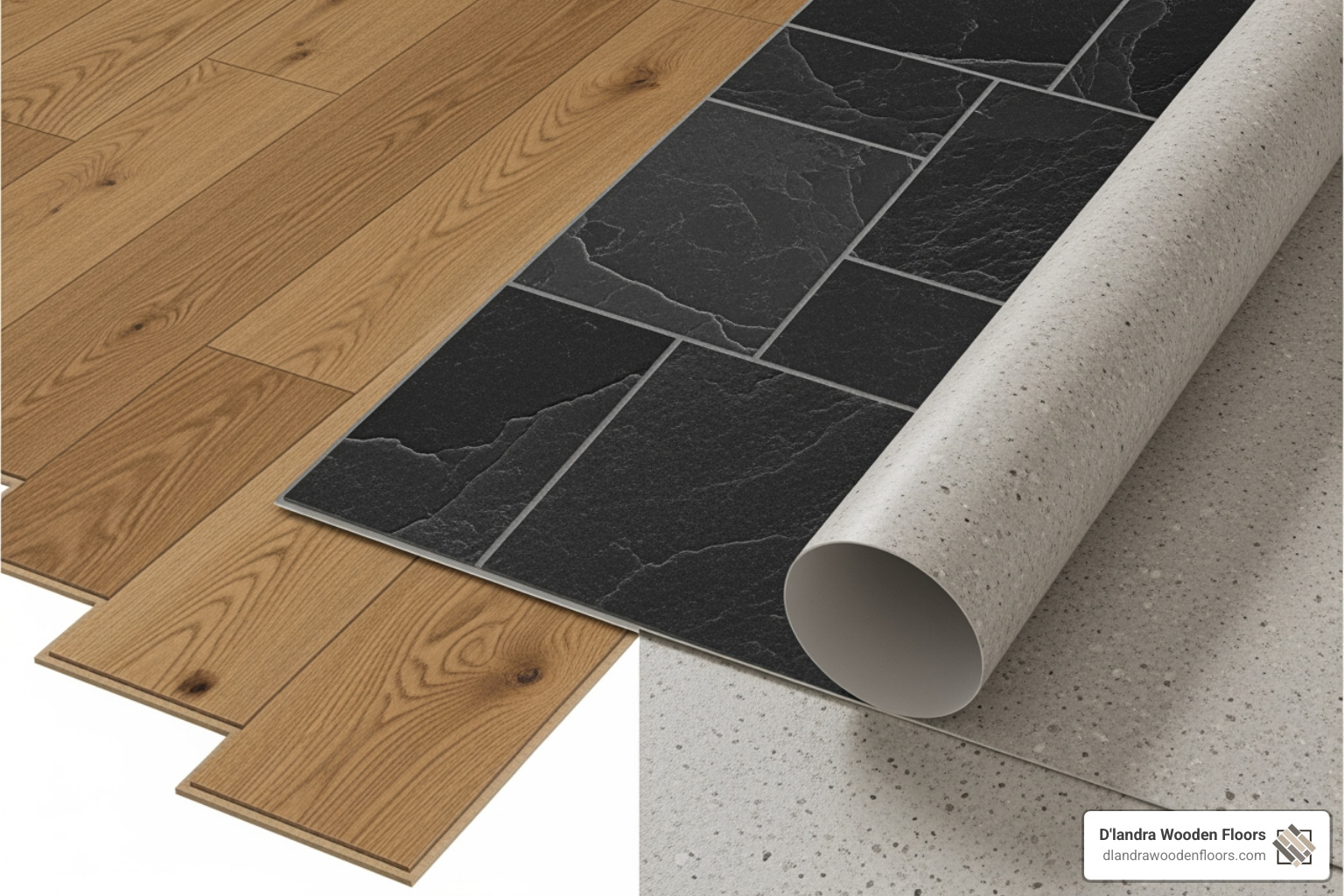
If you’ve always loved the look of hardwood but know it’s not practical for a bathroom, LVP is your answer. These long, narrow planks are designed to capture the warmth and character of real wood, complete with textured surfaces and beveled edges that feel authentic under your fingertips.
The beauty of LVP is that you get all the visual appeal of hardwood without any of the anxiety about water damage. It’s perfect for creating that spa-like retreat or rustic farmhouse vibe in your bathroom, all while standing up to Florida’s humidity and daily splashes.
Luxury Vinyl Tile (LVT)
For homeowners who prefer the sophisticated, clean look of stone or ceramic, LVT delivers beautifully. These tiles come in various square and rectangular formats, mimicking everything from marble and travertine to slate and concrete.
The advantage over traditional tile? LVT is warmer to the touch, more forgiving on dropped items, and far easier to install. You can even add grout lines for extra realism if you want, though they’re not structurally necessary. It’s the perfect solution for achieving that high-end tile aesthetic without the cold surface or hefty price tag.
Vinyl Sheet
Sometimes the simplest solution is the smartest one. Vinyl sheet flooring comes in large rolls (typically 6 or 12 feet wide), allowing for seamless installation with minimal or no seams. This is especially valuable in bathrooms, where fewer seams mean fewer potential entry points for water.
Modern vinyl sheets have come a long way from the dated patterns you might remember. Today’s options include attractive wood-look and tile-look designs at budget-friendly prices. For smaller bathrooms or powder rooms, sheet vinyl offers excellent value and watertight protection.
Rigid Core: The Heart of Modern Waterproof Vinyl
Here’s where things get really interesting. Within both LVP and LVT categories, you’ll find products labeled “rigid core.” This isn’t just marketing speak – it represents a genuine advancement in vinyl flooring technology. The rigid core construction is what makes modern waterproof bathroom vinyl flooring truly 100% waterproof, not just water-resistant.
Stone Plastic Composite (SPC)
SPC vinyl features a core made from natural limestone powder blended with polyvinyl chloride and stabilizers. The result? An incredibly dense, rigid plank that laughs in the face of South Florida’s temperature swings and humidity. The Barlinek ‘Next Step’ collection, for example, uses a high-density, flexible SPC mineral core specifically engineered to resist dents.
This density is SPC’s superpower. Drop a shampoo bottle? No problem. Heavy vanity pressing down? It won’t leave a mark. The extreme stability of SPC makes it particularly well-suited for our climate, where less stable materials might expand or contract.
Wood Plastic Composite (WPC)
WPC vinyl takes a slightly different approach, incorporating wood composites like recycled wood pulp and plastic into its core. While still 100% waterproof and highly durable, WPC tends to be a bit softer and thicker than SPC.
This translates to real benefits in a bathroom setting. WPC feels more comfortable underfoot – a welcome feature when you’re stepping out of the shower on a chilly morning. It also absorbs sound better, reducing that echo you sometimes get in tile bathrooms. If comfort is high on your priority list, WPC deserves serious consideration.
Both SPC and WPC rigid core options deliver exceptional dent resistance that traditional vinyl simply can’t match. Their dense cores prevent impressions from furniture, dropped objects, or high heels, keeping your floor looking pristine for years. Many rigid core products also come with an attached underlayment for even greater improved comfort and sound insulation.
For a closer look at one of our premium rigid core options, explore our Manhattan SPC Luxury Vinyl Collection.
Choosing the right type of waterproof bathroom vinyl flooring
So which type is right for your bathroom? It really comes down to your personal priorities and the specific demands of your space.
If you’re dreaming of authentic wood looks that bring warmth and character to your bathroom, LVP is your go-to choice. It’s perfect for master bathrooms where you want that spa-like, natural aesthetic.
For those who prefer the neat stone or ceramic styles that convey elegance and sophistication, LVT hits the mark. It’s ideal for modern or transitional bathrooms where clean lines and polished looks matter.
When you need a seamless, budget-friendly option, especially in smaller bathrooms or powder rooms, sheet vinyl makes excellent practical sense. The minimal seams provide extra water protection where it counts most.
And if you want the ultimate durability and stability – particularly important in South Florida’s challenging climate – rigid core vinyl (whether SPC or WPC) is our top recommendation. It’s the best choice for busy family bathrooms that need to withstand daily wear while maintaining their beautiful appearance.
Our Waterproof Luxury Vinyl Tile Guide offers even more detailed insights to help you select the perfect vinyl for your specific bathroom needs.
Your Buyer’s Guide: How to Choose the Right Waterproof Bathroom Vinyl Flooring
Selecting the perfect waterproof bathroom vinyl flooring goes beyond simply picking a pattern that catches your eye. It’s about finding the sweet spot where beauty meets performance—especially important in South Florida, where humidity and moisture are part of daily life. Let me walk you through what really matters when you’re making this investment.
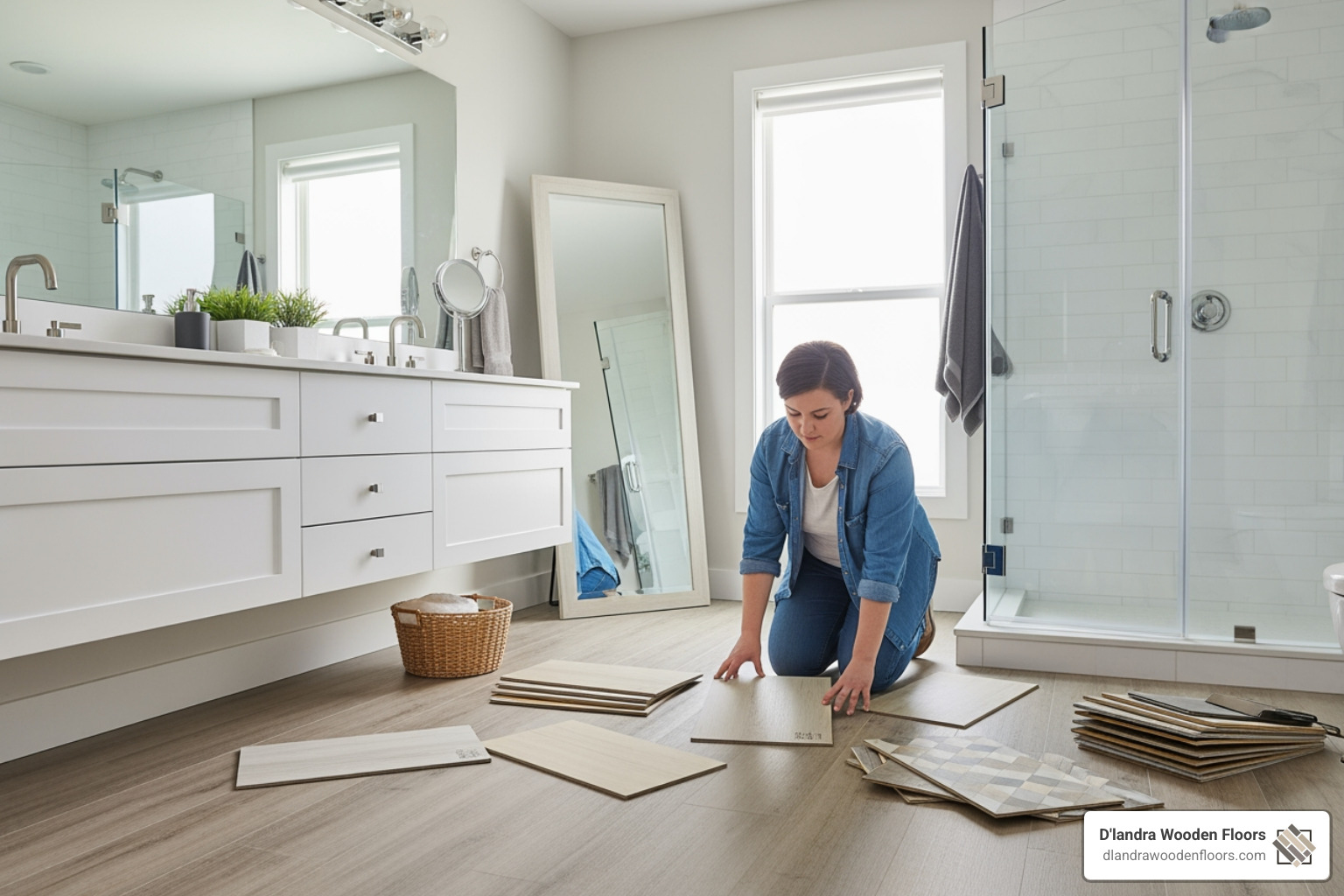
At D’Landra Wooden Floors, we’ve guided hundreds of Coral Springs and Broward County homeowners through this decision. Our goal is simple: empower you with the knowledge to choose confidently. You can Discover the Beauty of Luxury Vinyl Flooring by exploring our collections and learning what sets each one apart.
Key Technical Features to Scrutinize
Think of these technical specifications as the foundation of your floor’s performance. They determine how well your vinyl will hold up to everything a busy bathroom throws at it.
Wear Layer Thickness is measured in “mils” (thousandths of an inch), and it’s arguably your most important consideration. This transparent protective coating shields the decorative layer underneath from scratches, scuffs, and stains. For a family bathroom in Parkland or Coconut Creek, I recommend at least 12 MIL. But if you’ve got kids, pets, or high traffic, look for 20 MIL or higher. Some premium products offer 22 MIL, 28 MIL, or even 30 MIL protection—that extra thickness translates directly to years of beauty.
The Core Construction determines your floor’s fundamental character. SPC (Stone Plastic Composite) delivers maximum rigidity and dent resistance, staying rock-solid even when Florida temperatures fluctuate. WPC (Wood Plastic Composite) offers a slightly softer feel underfoot with excellent sound dampening—like walking on a cloud compared to cold tile. Both are 100% waterproof, so your choice comes down to whether you prioritize maximum durability or improved comfort.
Overall Product Thickness typically ranges from 3mm to 9mm. While the wear layer protects the surface, total thickness affects how substantial the floor feels and how well it masks minor subfloor imperfections. Thicker generally means more luxurious, though it’s not the only factor that matters.
Many quality products include an Attached Underlayment, which is a game-changer. This built-in feature adds cushioning, reduces noise, and provides an extra moisture barrier—all without additional installation steps. If your chosen waterproof bathroom vinyl flooring doesn’t include one, we strongly recommend adding a separate moisture-resistant underlayment. Our guide on Vinyl Flooring with Underlayment explains why this matters so much in bathroom applications.
Surface Texture has evolved dramatically. Advanced techniques like “Embossed In Register” (EIR) align the texture perfectly with the visual pattern. Touch a wood-look plank and you’ll feel the grain lines exactly where you see them. This realism is stunning, plus textured surfaces improve slip resistance—a critical safety feature when stepping out of the shower.
Designing Your Dream Bathroom: Style & Aesthetics
Now for the exciting part—bringing your vision to life!
Wood-look visuals have reached remarkable levels of realism. Modern digital printing technology, like SuperHD with up to 24 unique plank patterns, ensures your floor won’t show obvious repeats. Whether you’re drawn to rich, dark walnut tones or breezy whitewashed oak, you can achieve that warm, natural aesthetic without worrying about water damage. Our Wood Look Vinyl Flooring collection showcases the incredible range available.
Stone and tile visuals open up entirely different design possibilities. Imagine the elegance of marble, the rustic charm of slate, or the industrial edge of polished concrete—all without the cold, hard surface traditional tile requires. These options capture sophisticated aesthetics while keeping your bathroom comfortable underfoot.
Plank and tile size influences how your space feels. Larger format pieces can make a small bathroom feel more expansive by reducing visual breaks. Narrower, traditional plank widths create a more classic look. There’s no wrong answer—just what speaks to your personal style.
Color and shade set the entire mood. Light tones brighten and open up smaller spaces, making them feel airy and fresh. Darker shades add drama and luxury, creating a spa-like retreat. Consider how your flooring will complement existing fixtures, cabinetry, and wall colors. For fresh inspiration, check out the latest Interior Design Trends we’re seeing across South Florida.
Vinyl vs. Other Common Bathroom Flooring Options
Let’s get practical and compare waterproof bathroom vinyl flooring with the other popular choices you’re probably considering.
Water Resistance: This is where vinyl truly shines. Traditional ceramic or porcelain tile is water-resistant, but grout lines can allow moisture through to the subfloor over time. Laminate, despite what some marketing suggests, is only water-resistant for limited periods—typically around 30 hours before swelling begins. True waterproof vinyl is 100% moisture-proof from top to bottom, giving you complete peace of mind.
Cost: Vinyl delivers premium looks at a fraction of the price. While quality tile installation can run $8-$15 per square foot (materials plus labor), and laminate typically costs $3-$8 per square foot, waterproof bathroom vinyl flooring ranges from $1-$5 per square foot for materials, with straightforward installation keeping labor costs reasonable. That’s up to 50% less than natural stone or hardwood alternatives.
Durability: Modern rigid core vinyl stands up remarkably well to daily wear and tear. Tile is certainly durable but can crack if something heavy drops on it. Laminate, while tough on the surface, can’t handle prolonged moisture exposure. Vinyl’s resilient construction—especially SPC and WPC cores—resists impacts, scratches, and water damage equally well.
Installation: Here’s where vinyl really pulls ahead. Many products feature click-lock systems that install quickly over existing floors (including tile, in most cases). No mortar, no grout, no extensive subfloor work in many situations. Tile installation requires professional expertise, precise cutting, and days of drying time. Vinyl can often transform a bathroom in a single day.
Maintenance: Vinyl wins hands-down. Simple sweeping and damp mopping keep it looking pristine. Tile requires regular grout cleaning and periodic resealing to prevent staining and mildew. Laminate demands careful cleaning to avoid moisture damage. Vinyl’s non-porous surface wipes clean effortlessly—perfect for busy South Florida families.
At D’Landra Wooden Floors, we’ve seen how vinyl consistently outperforms traditional options in bathroom applications, which is why it’s become our most recommended solution for moisture-prone areas.
Budgeting and Potential Drawbacks
Let’s talk honestly about investment and limitations—because every flooring choice involves trade-offs.
Average cost per square foot for materials typically falls between $1 and $5, depending on factors like brand reputation, wear layer thickness, core type, and design sophistication. Installation costs are separate and vary based on your bathroom’s layout and whether subfloor preparation is needed. Our Vinyl Plank Flooring Cost page breaks down what you can expect to invest.
The long-term value of waterproof bathroom vinyl flooring is exceptional. Unlike materials that need replacement after water damage, vinyl keeps performing year after year. Its durability and low maintenance mean fewer repairs and replacements down the road—smart economics for any homeowner.
Potential for dents exists, though it’s minimal with rigid core products. SPC, in particular, resists impressions remarkably well. That said, if you drop something extremely heavy from height, you might see an indentation. This risk is far lower than with traditional vinyl or wood flooring, but it’s worth mentioning for complete transparency.
Fading in direct UV light can occur over time with prolonged sun exposure. South Florida’s intense sunshine makes this worth considering. If your bathroom has windows with direct sun, using curtains or blinds during peak hours will protect your investment and keep colors vibrant for years.
Subfloor condition importance cannot be overstated. While vinyl is forgiving compared to tile, it still needs a clean, dry, and reasonably level surface underneath. Bumps, dips, or debris will telegraph through and potentially compromise click-lock connections. Proper subfloor preparation isn’t just recommended—it’s essential for long-term performance. Think of it as the foundation that ensures everything above it succeeds.
We’re here in Coral Springs to help you steer these decisions. Whether you’re renovating a master bath or updating a powder room, choosing the right waterproof bathroom vinyl flooring means balancing all these factors to find what works best for your lifestyle, budget, and design vision.
Installation and Long-Term Care for Your Vinyl Floor
You’ve picked out your dream waterproof bathroom vinyl flooring—now comes the exciting part: bringing it to life in your space. A careful, professional installation is what transforms a quality product into a beautiful, long-lasting floor. And the best news? Once it’s in, keeping it gorgeous is refreshingly simple.
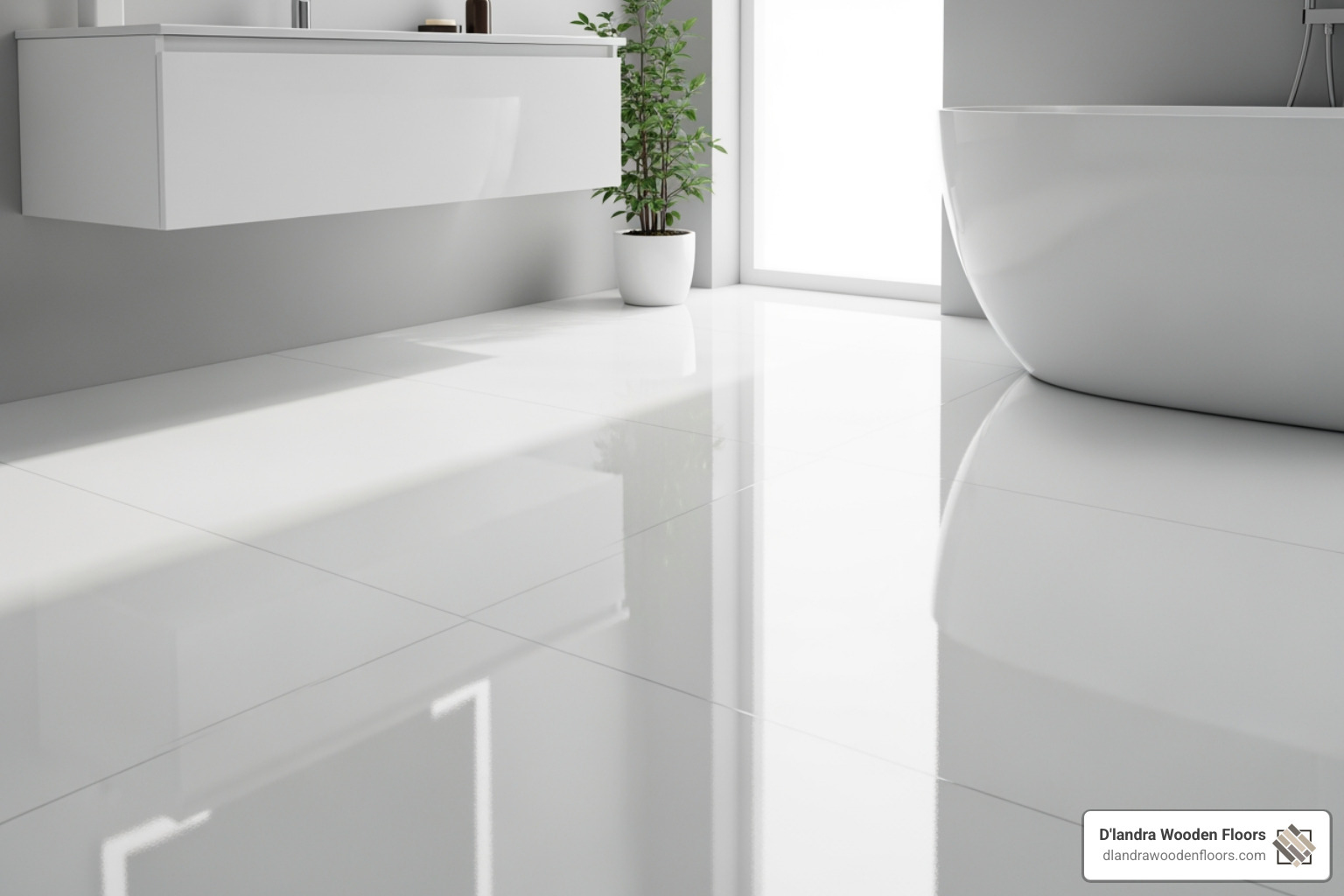
Here in South Florida, where humidity and moisture are constant companions, proper installation isn’t just about aesthetics—it’s about protecting your investment from day one. At D’Landra Wooden Floors, we’ve seen how Quality Vinyl Installation makes all the difference in how your floor performs over the years.
Installation Considerations for a Watertight Finish
Getting your waterproof bathroom vinyl flooring installed correctly means paying attention to several crucial details. Think of it as setting the stage for years of worry-free performance.
Subfloor preparation is where everything begins. Your existing subfloor needs to be completely clean, bone dry, and level before a single plank goes down. Even small bumps or dips will show through vinyl, creating an uneven surface that’s both unsightly and potentially problematic. If you’re installing over old ceramic or porcelain tile, those grout lines need to be filled with a leveling compound first. This creates the smooth, flat canvas your new floor deserves.
Before installation day arrives, your vinyl needs an acclimation period—typically 24 to 48 hours sitting in the room where it’ll be installed. This lets the planks or tiles adjust to your home’s temperature and humidity. Skip this step, and you might see gaps or buckling later as the material expands or contracts. In our South Florida climate, where humidity can swing dramatically (especially with air conditioning), acclimation isn’t optional—it’s essential.
When it comes to installation methods, you’ll typically choose between two approaches. Click-lock floating floors are popular for a reason: the planks simply snap together and rest on top of the subfloor without adhesive. It’s relatively quick, and many homeowners with DIY experience can tackle it. Glue-down installation, on the other hand, permanently bonds the vinyl to the subfloor with adhesive. This creates an incredibly stable, flat surface and is often the go-to method for sheet vinyl or commercial applications.
Now, here’s where we get honest: DIY or professional installation? While click-lock systems are marketed as DIY-friendly, bathrooms present unique challenges. You’re working around toilets, vanities, and often awkward corners. Precise cuts matter. Ensuring proper expansion gaps around the perimeter matters. Getting a truly watertight seal matters. One mistake can compromise the waterproof integrity you paid for. Our team provides Reliable Flooring Installation for South Florida Homes, and we’ve repaired enough well-intentioned DIY projects to know that professional installation is often the smarter investment, especially in wet areas like bathrooms.
Simple Maintenance for a Lasting Shine
Here’s the truly wonderful thing about waterproof bathroom vinyl flooring: maintaining it is almost ridiculously easy. No special treatments, no complicated rituals—just straightforward care that fits into your regular cleaning routine.
Routine cleaning is as simple as it gets. Sweep or vacuum regularly using a soft-bristled attachment to pick up dirt, dust, and any grit that might scratch the surface over time. When you need to mop, warm water and a damp (not soaking wet) mop will handle most everyday messes beautifully. The non-porous surface means spills and splashes wipe right up without leaving stains.
For those occasional deeper cleans or stubborn spots, reach for approved cleaners—specifically, pH-neutral cleaners designed for vinyl flooring. These work effectively without damaging the protective wear layer. You’ll find them at most home improvement stores, and a bottle lasts a long time.
Preventing scratches takes minimal effort. If you have a small stool or shelving unit in your bathroom, stick felt pads under the legs. This simple step prevents scuffs when furniture gets moved around. While your vinyl’s wear layer is impressively scratch-resistant, it’s not invincible—a little prevention goes a long way.
Now, let’s talk about what to avoid. Never use abrasive scrubbers like steel wool or rough scouring pads—they’ll damage the surface faster than you can say “regret.” Steam mops might seem like a good idea, but they can potentially force moisture into seams or weaken adhesive over time, so we recommend skipping them unless your specific manufacturer explicitly says otherwise. Steer clear of wax-based cleaners too; they leave a dull buildup that’s tough to remove. Harsh chemical cleaners are also on the no-fly list—they can strip the wear layer and dull that beautiful finish you invested in.
For general bathroom cleaning supplies and tools, your local hardware store has everything you need. You can Find cleaning supplies and tools designed specifically for waterproof vinyl flooring.
The bottom line? Your new bathroom floor will reward simple, consistent care with years of beautiful performance. No complicated maintenance schedules, no expensive specialty products—just straightforward cleaning that keeps your floor looking as stunning as the day it was installed.
Frequently Asked Questions about Waterproof Vinyl Flooring
We hear these questions all the time from homeowners throughout Coral Springs, Parkland, and across Broward County. Let’s clear up some of the most common confusion about waterproof bathroom vinyl flooring.
Is all vinyl flooring waterproof?
Here’s where things get interesting—and where many people make a costly mistake. Not all vinyl flooring is created equal when it comes to water resistance.
The term “vinyl flooring” is actually quite broad. While all vinyl has some level of water resistance built into its nature, there’s a world of difference between “water-resistant” and “100% waterproof.” Older sheet vinyl and some traditional vinyl tiles can handle the occasional splash or spill, but leave standing water on them for too long, and you might see problems.
For bathrooms, you need products specifically labeled as 100% waterproof. The secret is in the core construction. Rigid core vinyl—that includes both SPC (Stone Plastic Composite) and WPC (Wood Plastic Composite) products—is genuinely waterproof through and through. These products feature a dense, stable core that won’t swell, warp, or buckle even if water sits on them. This makes them ideal for bathrooms where moisture is a daily reality, not just an occasional accident.
Always look for “waterproof” or “rigid core” on the product specifications. Don’t assume all vinyl is bathroom-ready—reading the fine print can save you from a soggy surprise down the road.
Does waterproof vinyl flooring need an underlayment in the bathroom?
The answer here is refreshingly straightforward: it depends on what you buy.
Many high-quality waterproof bathroom vinyl flooring products, particularly rigid core options, come with a pre-attached underlayment already built in. This integrated layer handles multiple jobs at once—it adds cushioning underfoot, dampens sound (goodbye, bathroom echoes!), and provides an extra moisture barrier between your floor and subfloor. If your product has this feature, you’re all set. No additional underlayment needed.
But if your chosen vinyl doesn’t have a pre-attached underlayment, we strongly recommend adding a separate moisture-blocking underlayment in your bathroom. Think of it as insurance for your investment. This extra layer protects your subfloor from any potential moisture intrusion, makes the floor more comfortable to stand on, and reduces noise—which is especially nice in a bathroom where sounds can really bounce around.
The manufacturer’s installation instructions will always specify their underlayment recommendations. When in doubt, err on the side of protection, especially in a moisture-heavy environment. You can learn more about underlayment options on our Vinyl Flooring with Underlayment page.
Can you install waterproof vinyl flooring over existing tile?
Yes, and this is one of our favorite renovation shortcuts! Installing waterproof bathroom vinyl flooring over existing ceramic or porcelain tile is absolutely possible in most cases. It saves you the time, mess, and expense of tile demolition—a huge win for bathroom renovations.
However, success depends on meeting a few important conditions. First, the existing tile floor needs to be relatively level. Any significant dips or bumps will telegraph through your new vinyl, creating an uneven surface that looks bad and can compromise the locking system of click-lock planks. A self-leveling compound can fix minor irregularities.
Second, those grout lines between tiles need attention. You’ll need to fill them with a patching or leveling compound to create a smooth, flat surface. If you skip this step, the grout lines can eventually show through as visible indentations or “ghosting” on your beautiful new floor.
The existing tile must also be thoroughly cleaned and completely dry before installation. And finally, make sure there’s no structural damage—no loose tiles, cracks, or signs of moisture problems underneath. Any underlying issues need to be fixed before you install new flooring on top.
When these conditions are met, installing over existing tile is not only possible but often the smartest choice for a bathroom remodel. It’s faster, cleaner, and gets you to your dream bathroom sooner.
Conclusion
Your bathroom deserves flooring that works as hard as it looks good. After everything we’ve covered, it’s clear that waterproof bathroom vinyl flooring isn’t just a smart choice for South Florida homes—it’s often the best choice. It brings together everything you need: complete protection against moisture, durability that stands up to daily life, beautiful designs that rival natural materials, and maintenance so simple you’ll wonder why you didn’t make the switch sooner.
Whether you’re drawn to the warmth of wood-look LVP, the sophistication of stone-look LVT, or the unbeatable stability of rigid core SPC and WPC, there’s a vinyl option that fits your vision and your budget. Unlike cold, hard tile or water-sensitive laminate, modern vinyl gives you comfort underfoot, easy installation, and genuine peace of mind in Florida’s humid climate.
At D’Landra Wooden Floors, we’ve helped hundreds of families across Coral Springs, Parkland, Coconut Creek, and throughout Broward County find their perfect bathroom flooring. We know what works in our climate, and we’re passionate about helping you make a confident decision. From your first question to the final installation, we’re here to guide you every step of the way.
Your dream bathroom is closer than you think. Let’s make it happen together. Get a Free In-Home Flooring Estimate and we’ll bring samples right to your door so you can see how they look in your space. Or dive into our premium waterproof luxury vinyl plank collections online and start envisioning the change. Beautiful, durable, worry-free floors are waiting—and we can’t wait to help you find yours.